
Egypt's Unseen Dance World
Mar 26, 2026
People often forget that in countries like Egypt, where family and women’s spaces are often kept private from the eyes of the public, that the clips of dancers we see online from night clubs or weddings is far from the full picture when it comes to the current dance culture here. In the last several years more and more Egyptian women are seeking out regular ladies only classes, events, and parties as a space to enjoy dancing and expressing themselves. These spaces have also become an opportunity for talented dancers to teach and perform professionally within the social and societal limitations that come with the culture's complicated opinions around dancing for the public eye.
The ladies only dance world of Cairo has been evolving and expanding like crazy in the past decade. These days you can find regular weekly 'belly dance' classes at most gyms and dance studios as well as speciality classes and workshops with both local teachers and celebrity performers. Ladies only parties are also a popular pastime where women of all ages wear anything they like, from their cutest outfits to galabeyas and even full belly dance costumes, and enjoy the night dancing freely within these safe spaces. These events often feature performances by local dance teachers and other female artists such as folklre dancers, DJ's, tabla players, henna and makeup artists, and more. Women-run henna party companies are also flourishing these days, offering a modern take on the traditional pre-wedding celebration.
Dance has always been an integral part of the lives of Egyptian women but Ive found that often the view of dance in Egypt from the eyes of outsiders revolves around the night club scene and over-looks and underestimates the variety of ways that women here continue to practice, enjoy, and preserve their cultural dance.
Watching new dance teachers and artists succeed and flourish within this scene, at least in my opinion, has really hopeful implications for the future of the dance. For that reason, I want to bring some attention and awareness not just to this part of the dance scene in Egypt, but also to the women who are using it to follow their passion for dance and empower others.
I have been working within this community for around 8 years and regularly collaborate with Cairo-based teachers on events, hosting them for online classes, and organizing workshops for groups visiting Cairo. I decided to do some interviews with teachers I often work and/or study with so you can learn more about them and their perspectives on dance.
We are starting with 3 interviews but will be updating soon with more!
How did you start dancing?
I started dancing at a very young age, and I had the talent from the beginning. As I grew older, I kept developing myself with every stage of my life, gaining a deeper understanding of my body and movement.
When did you decide to pursue dancing or teaching professionally?
I decided to take it professionally when I fully understood how a movement starts and ends, and when I became able to clearly demonstrate and explain it through my body. I also realized that dance is an important part of Egyptian culture that be deeply studied and understood. Once I became confident in teaching myself, I decided to start teaching others and sharing my knowledge.
What does your work look like now?
Thankfully, my work has grown a lot. I’ve become more recognized, and people’s trust in me continues to grow, which gives me a greater sense of responsibility to always meet their expectations.
What are your future goals or dreams?
My dream is to travel around the world and spread Egyptian dance culture everywhere, and to make sure no girl feels like she can’t dance or express herself.
What advice would you give to girls learning dance, in Egypt or abroad?
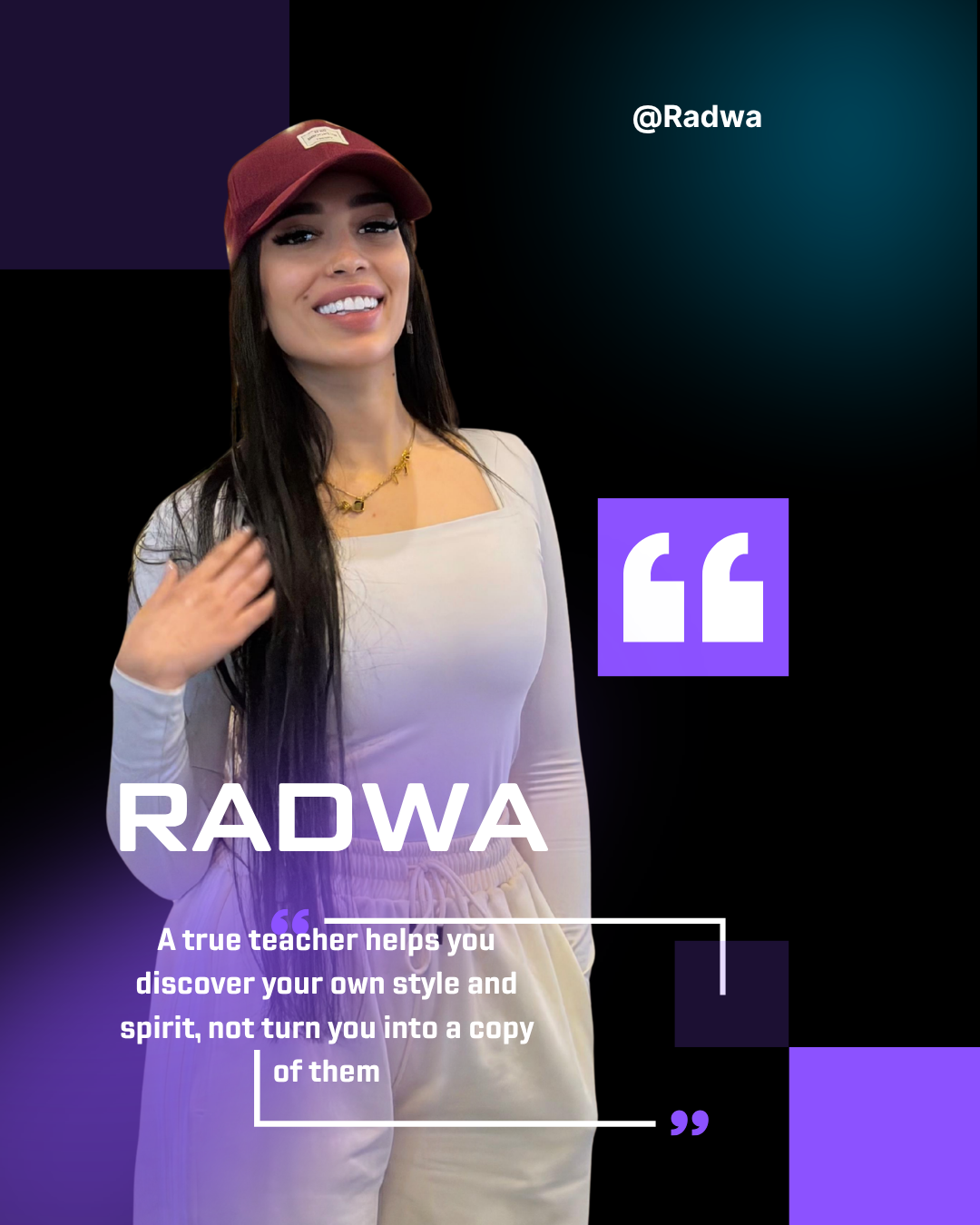
Be yourself and don’t imitate anyone. A true teacher helps you discover your own style and spirit, not turn you into a copy of them.
Dance is not just movements; it’s emotion, energy, and understanding the music you dance to. It is a rich culture that must be respected and performed in a pure and authentic way, without vulgarity or using it solely for seduction.
How did you start dancing?
I started dancing while I was working as a fitness trainer at a gym.
One day there was a party at the gym, so I danced, and everyone was amazed. People began asking me to teach them some movements, so I started showing them. That was when I realized I had a talent for teaching and for explaining movements in a simple and clear way
When did you decide to pursue dancing or teaching professionally?
I began opening classes at the same place, then one gym after another, until I was teaching at multiple branches. Eventually, I was teaching in about 35 gyms. I also started organizing dance events in Cairo and in different cities across Egypt.
What does your work look like now?
Today, I have my own studio that offers many types of classes including fitness, yoga, flexibility training, and different styles of dance. I teach both Egyptians and foreigners, and I also organize workshops for both beginners and professionals, with certified training programs.
What are your future goals or dreams?
My dream is to have more than one studio in every country.
What advice would you give to girls learning dance, in Egypt or abroad?
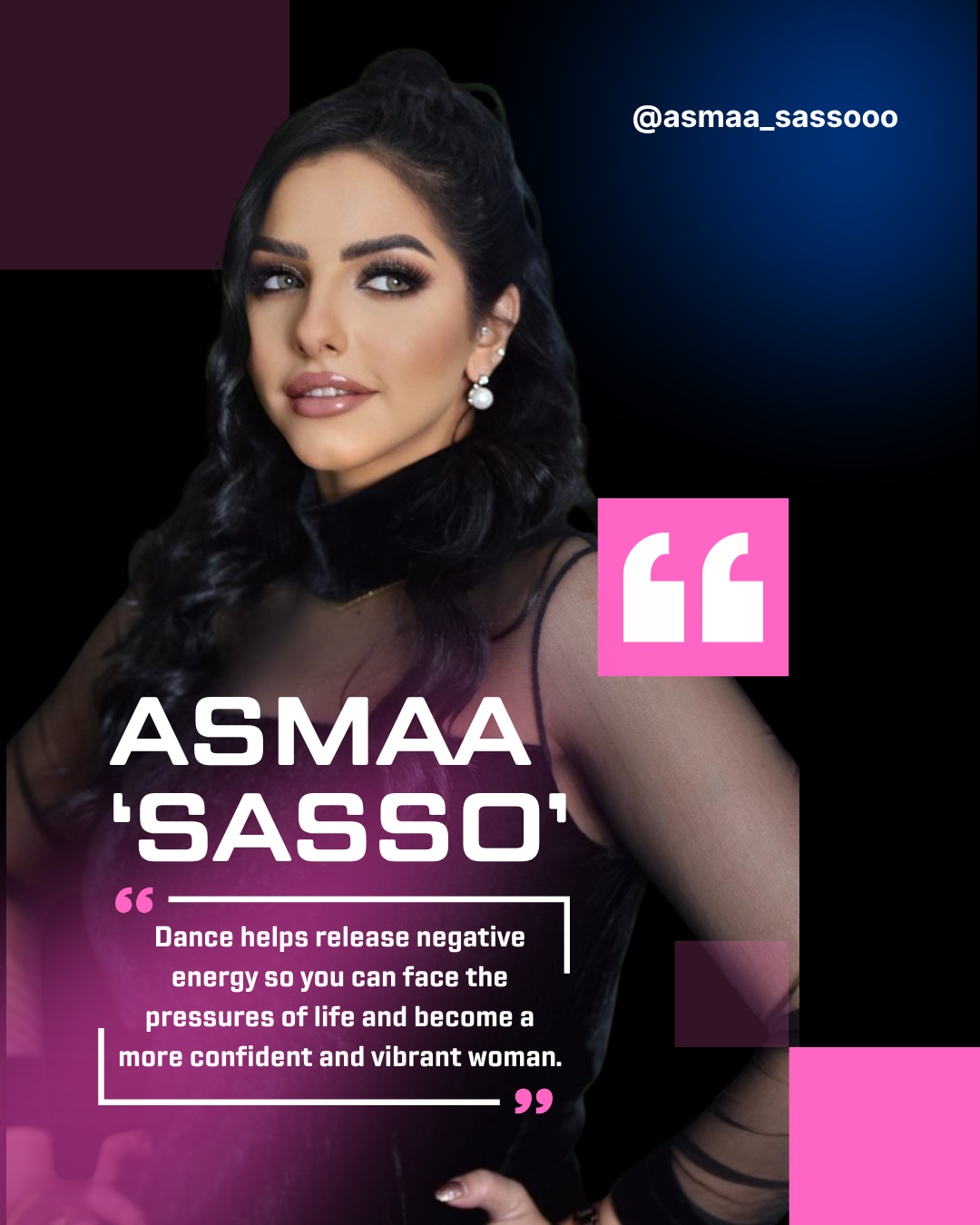
My advice to women everywhere, inside and outside the country, is that dance is life. Dance helps you feel your femininity, increases your confidence, and improves the shape of your body. It affects your whole life. The way you speak changes, the way you walk changes, and the way you interact with others changes. You will love yourself more, burn calories with simple effort, and enjoy moving to music that energizes every part of your body. Dance can make you look younger and helps release negative energy so you can face the pressures of life and become a more confident and vibrant woman

How did you start dancing?
I started dancing when I was 8 years old at school, where I used to organize and perform in graduation shows and children’s events. After that, I joined a folkloric dance course with the founder of a troupe in Alexandria. I also attended classes with several different instructors. But I was always asking myself why I was there, and I realized I had a natural passion and talent for teaching. I started working in one place just to try it out, then went on to teach at more than 20 gyms and studios offering belly dance classes for 10 years.
When did you decide to pursue dancing or teaching professionally?
My work has evolved a lot over the years. I developed my own unique style. I’ve always focused on learning how to stand out rather than copy anyone else, and that’s something my students often recognize and appreciate.
What does your work look like now?
I opened my own women only studio that offers different types of fitness training and dance classes. I created my own class designed for all levels, from complete beginners to advanced dancers. I teach to all kinds of music I love, including traditional, folk, and neo-classical styles. I also welcome dancer friends from different countries to exchange artistic and cultural experiences. I truly love being surrounded by my students.
What are your future goals or dreams?
Dancing has always been the thing that makes me happiest. I always imagined myself performing on the biggest stages in the world, and I’m proud to say I’ve achieved part of that dream. Part of my dream came true when I had the opportunity to teach outside of Egypt, in Europe and in several Arab countries. I was fully respected for my personal boundaries, including not allowing full video recordings. It was something that truly made me happy, and every time I taught abroad, students would request me again.
What advice would you give to girls learning dance, in Egypt or abroad?
My advice to all women is love yourself, your look, and your body. When you dance, your soul moves before your body does. Dance is femininity. Dance is feeling the music and translating it through your body. Do not copy anyone. Feel the music deeply, and if you are not a native speaker, understand the lyrics before you dance to them. Learn the movements from your teachers, but perform them with your own emotion. Give each movement the time it deserves, even if the music is fast. It is not about doing many moves. Aggression has no place in dance. Dance is one of the highest and most beautiful expressions of feminine energy. Technique takes time to master. Some steps will require patience, but with consistent practice, you will perform them with ease.


